Roof repair and leak repair
Find where the water actually gets in, fix that, and tell you honestly how much life the roof has left.
Most leaks are not the whole roof
A wet spot on a ceiling usually traces back to one small failure: flashing that has pulled away from a chimney or wall, a cracked rubber boot around a vent pipe, a valley that has worn through, a skylight seal, or a few shingles that blew off in a storm. None of those need a new roof. Finding the real entry point costs a fraction of replacing everything above it, and a proper repair can buy years.
The catch is that water travels. It can run along the underside of the roof deck or a rafter for several feet before it drips, so the stain inside is rarely right under the problem outside. That is why we get on the roof and trace it rather than patching wherever the ceiling is wet.
What we repair
- Flashing leaks at chimneys, side walls, dormers and step flashing, the single most common source of leaks we find.
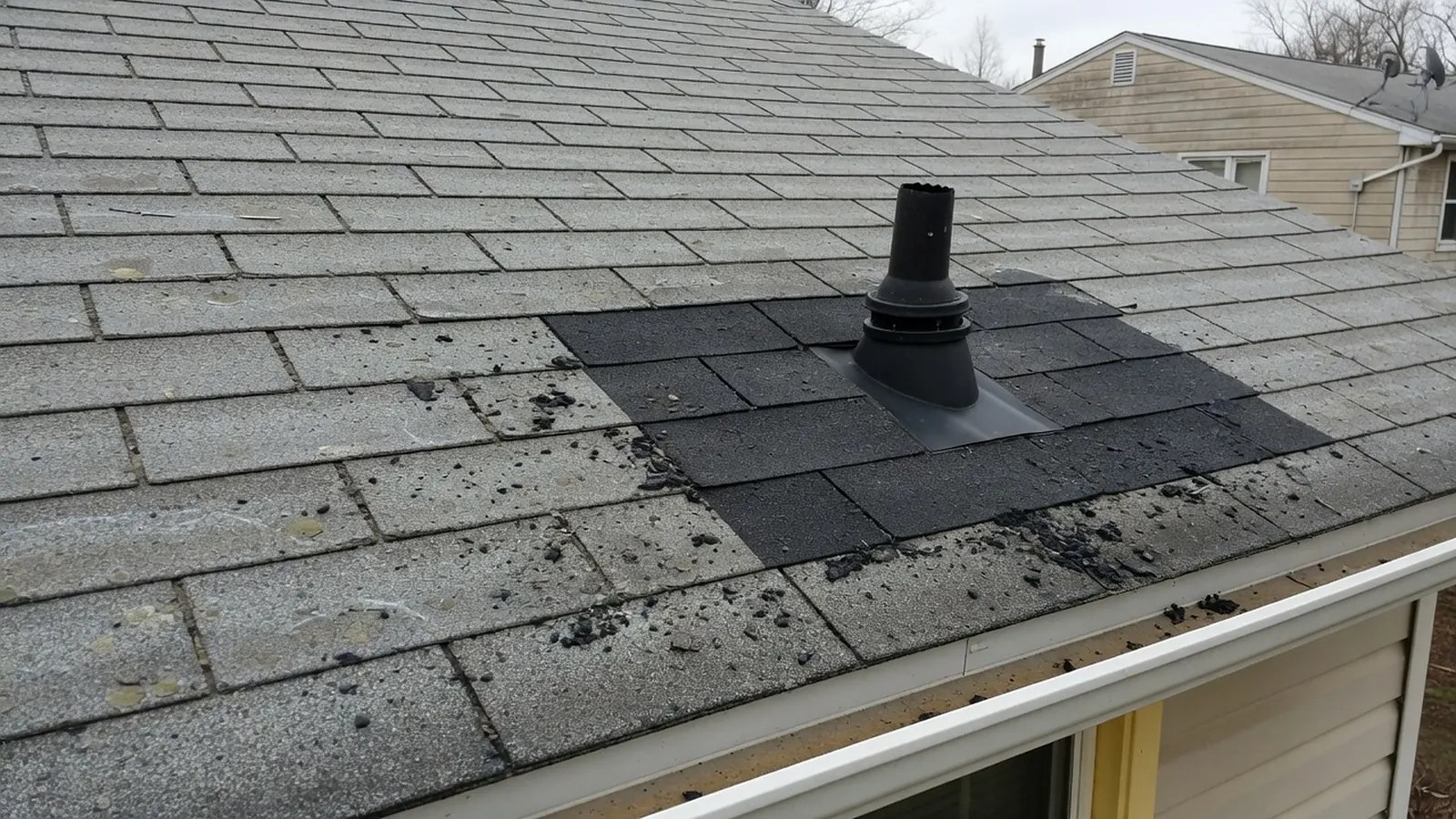
- Pipe boots and vents. The rubber collar around a plumbing vent cracks in the sun long before the shingles wear out.
- Missing, cracked or lifted shingles after wind, with new shingles matched as closely as the existing roof allows.
- Valleys, where two roof planes meet and carry the most water.
- Skylights, resealed or replaced. We have replaced skylights as part of a new roof for customers who first called about a leak.
- Storm damage from wind or fallen limbs, with photos you can pass to your insurer.
- Ice dam damage at the eaves after a hard winter.
When we will tell you not to repair
Some roofs are past the point where a repair makes sense. If the shingles are curling across the whole roof, the granules are washing into the gutters, or leaks are showing up in several places at once, a repair only moves you to the next leak. In that case we will say so and give you the cost of a replacement alongside the cost of the repair, so you can decide with both numbers in front of you. Our guide to repair or replacement explains how to tell.
Before we arrive
If water is coming in, put a bucket under it and move anything valuable out of the way. If the ceiling is bulging with water, a small hole at the lowest point lets it drain into the bucket instead of bringing the ceiling down. Take photos of the stain and the roof from the ground. They help us and, if it was a storm, your insurer.
Common questions
Can a roof leak be repaired without replacing the roof?
Usually, yes. Most leaks come from flashing, a pipe boot, a valley or a few damaged shingles. If the rest of the roof is sound, repairing the source is the right answer.
How do you find where a roof is leaking?
We start at the stain inside, then check the roof above and uphill of it: flashing, vents, valleys and any penetrations. Water often runs several feet before it drips, so the entry point is rarely directly above the stain.
Will homeowners insurance pay for a roof repair?
Sudden damage from a storm or a fallen tree is often covered. Wear and age usually are not. Call your insurer first, and we can document the damage with photos for your claim.
How much does a roof repair cost?
It depends on what failed and how hard it is to reach. A pipe boot is a small job; rebuilding chimney flashing is more. Our cost guide covers what moves the number, and we price the repair after we have found the cause.
This page was last updated in September 2026.
Got a leak you want looked at?
Call (973) 625-7663. If a repair will do the job, that is what we will quote.