The short answer: vinyl lap siding is the classic, lower-cost choice that suits almost any house. Board and batten gives a bolder farmhouse or modern look and usually costs somewhat more to install. Many North Jersey homeowners use both: lap siding on the main walls and board and batten on the gables or the entry.
What each one is
Lap siding runs horizontally. Each course overlaps the one below it, like traditional wood clapboard, and it comes in several profiles, from narrow clapboard to Dutch lap with a deeper shadow line. It is what most houses in New Jersey already have.
Board and batten runs vertically: wide boards up the wall, with narrow battens covering the seams. It started on barns and farmhouses, and today it is one of the most requested looks on renovations, especially in white with black windows and trim.
How they compare
| Vinyl lap siding | Board and batten | |
|---|---|---|
| Look | Classic, suits colonials, capes and ranches | Farmhouse or modern, strong vertical lines |
| Cost | The lower-cost option | Usually somewhat more, for backing and trim |
| Installation | Fastens across the studs | Needs solid backing behind the vertical panels |
| Upkeep | Wash it occasionally; no painting | Same in vinyl; no painting |
| Best use | Whole house | Whole house on simple shapes, or as an accent |
Why board and batten costs a little more
Lap siding runs across the wall, so every piece crosses studs it can be fastened to. Vertical panels run parallel to the studs, so they need solid backing behind them to fasten into. That backing, plus the extra trim at corners, windows and the transitions to other materials, adds labor. The panels themselves are not the main difference. Using board and batten only on the gables or a bump-out keeps the added cost small. Our cost guide covers what else drives a siding price.
The mix: lap on the walls, board and batten up top
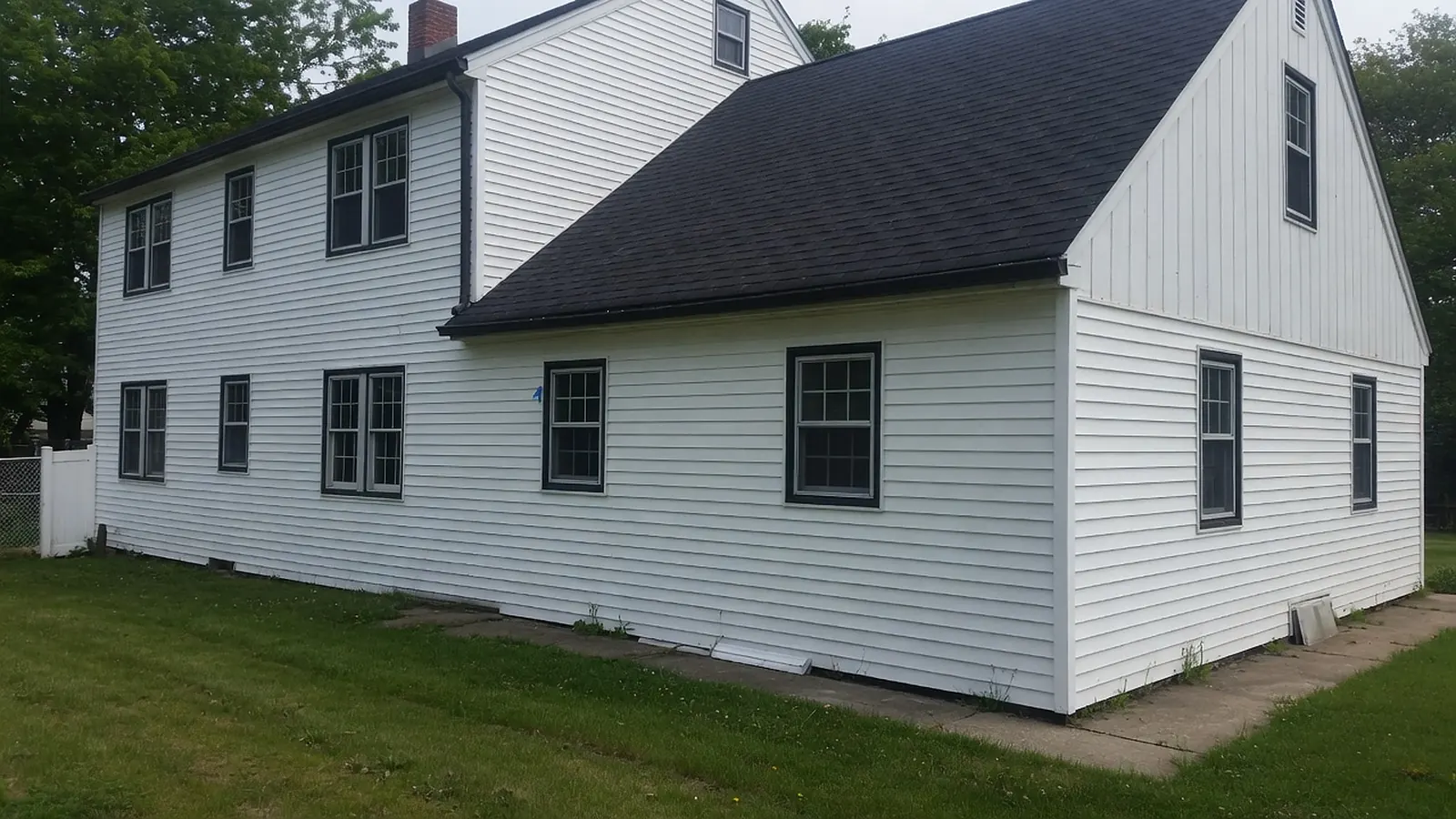
The combination in the photo above is the most popular way to use board and batten: lap siding on the main walls, board and batten on the gable ends. It adds character without committing the whole house to one texture, and it suits a colonial or cape as well as a newer house. The one detail that matters is the transition. Where the vertical siding meets the horizontal, a trim board and flashing keep water from getting behind the change in direction.
Which is right for your house?
- Choose lap siding if you want a traditional look, the lowest cost, or siding that matches the rest of the street.
- Choose board and batten if you are going for a farmhouse or modern look and the house has simple, strong shapes.
- Choose both if you want character on a budget: lap on the walls, board and batten on the gables or the entry.
We install CertainTeed siding products in both styles. See vinyl lap siding, board and batten siding, or all of our siding services.
Common questions
Does board and batten come in vinyl?
Yes. Vinyl board and batten has the same look without painting, in white, dark and in-between colors.
Does vertical siding leak more than horizontal?
Not when it is installed correctly over house wrap, with proper backing and flashing at the transitions and openings. Most problems come from the trim details, not the direction of the siding.
Can I add board and batten to only part of my house?
Yes. Gables, dormers, a front bump-out and the entry are the usual places, and it is the most common way we see it used.